Understanding mental health can feel complex, but breaking it down helps us see how each type uniquely affects people. Here’s a look at some common categories:
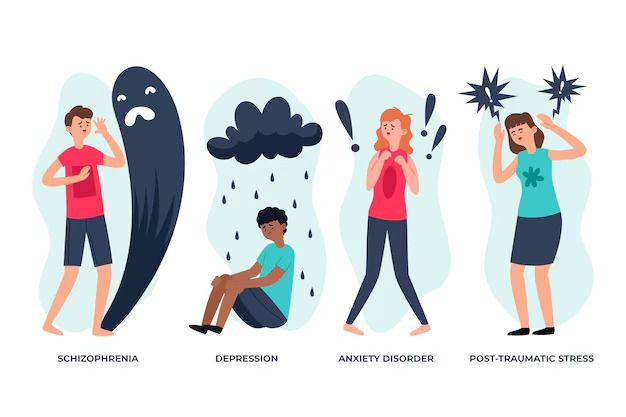
1. Mood Disorders: These are conditions where emotions swing beyond typical highs and lows. o Depression feels like carrying an invisible weight, making daily life feel dull and energy-draining. o Bipolar Disorder brings intense mood shifts—people experience high-energy “up” periods (mania) and low-energy “down” times (depression).
2. Anxiety Disorders: These involve persistent worry or fear that affects daily life. o Generalized Anxiety Disorder (GAD) can feel like an endless worry loop, even over everyday things. o Panic Disorder may cause sudden, intense bursts of fear or panic without warning. o Social Anxiety is like feeling you’re on a stage with everyone watching, even in normal social settings.
3. Psychotic Disorders: These alter a person’s sense of reality. o Schizophrenia involves symptoms like hallucinations (seeing or hearing things that aren’t there) and delusions, which can make it hard for individuals to differentiate between what’s real and imagined.
4. Eating Disorders: These are about much more than food; they involve complex feelings about body image and self-worth. o Anorexia Nervosa involves extreme food restriction, while Bulimia Nervosa involves cycles of overeating and purging.
5. Personality Disorders: These affect how someone relates to themselves and others. o Borderline Personality Disorder (BPD) can cause intense emotions, impulsive actions, and challenges in relationships. o Narcissistic Personality Disorder involves an inflated sense of self-importance but can mask deep insecurities.
6. Obsessive-Compulsive Disorders (OCD): This involves unwanted, repetitive thoughts and behaviors. o People with OCD may feel driven to repeat certain actions to ease their anxiety, like checking locks repeatedly or excessive cleaning. These categories give us a broad look at mental health, each one showing the variety and depth of challenges people might face. Being informed helps reduce stigma and increases empathy toward those experiencing these conditions.
Mental health: a term we hear often, but do we truly understand its significance? In a world that’s increasingly aware of mental well-being, it’s crucial to delve deeper into the complexities of mental health. From common conditions like anxiety and depression to more serious disorders, mental health affects millions of people worldwide. Let’s explore what mental health is, common mental disorders, their signs, symptoms, and available treatments. According to World Heath Organization Mental health is a state of mental well-being that enables people to cope with the stresses of life, realize their abilities, learn well and work well, and contribute to their community. It is an integral component of health and well-being that underpins our individual and collective abilities to make decisions, build relationships and shape the world we live in. Mental health is a basic human right. And it is crucial to personal, community and socio-economic development.
WHY IS MENTAL HEALTH IMPORTANT Mental health is just as important as physical health. When one is mentally healthy ,they cna function well in their daily lives ,adapt to change and engage in positively with others this helps individuals realize their full potential and cope effectively with the everyday tasks that life brings and enabling them to achieve their goals . if one struggles with their mental health it may bring struggles in maintaining a well balanced life, which will impact there ability to study work and enjoy meaningful relationship. The importance of mental health becomes even clearer when it relates to age progression. In a time of childhood and adolescence, it is of necessity that a steady state of mind allow young people to learn something crucial during this stage of life and to form positive attributes. Following the stage of young adulthood, the good state of mind would allow one to remain steady and handle the increasingly demanding pressure of work, family, and life in general. In the later stages of life, a person needs to maintain the mental well-being and good state of mind to be able to work, socialize, and find joy in their life. Mental Health Stigma Stigma still acts as a huge wall which prevents reaching these goals for many. A lot of people encountering some mental difficulties believe that people would make judgments or would misunderstand them. All these people out there can be suffering due to the stigma and fight their battle in isolation. There is an urgent need to change these perceptions and ensure that mental health is spoken about and stigma around it eradicated fully. Changing static views of mental disease and increasing sensitivity are two ways that encouraging efforts about mental health can put to good use. What matters is recognizing the fact that usage of language, mental health difficulties, social anxiety disorder for instance, or depression are not impairments, but ailments that are rather common in most of the people. With compassion and helping hands extended, people would be encouraged to step forward and seek help.
Factors Influencing the Mental Health of An Individual A mental health of a specific individual is determined by many factors one of which are biological, environmental, and behavioral. Some factors are unavoidable, like the genes that come with one’s family; however, people have the ability to overcome their adversities or seek others with a history of overcoming adversity. Events such as distressing experiences, grief, or chronic anxiety are core factors that make a person vulnerable which warrants protection along with self-help mechanisms in psych management. Stigmatizing Languages to Promote Positive Mental health in the Society Creating safe spaces to facilitate these discussions ensures people’s emotional well-being is supported without shame or stigma. Homes, workplaces, and educational institutions must actively promote a culture where individuals can safely share and discuss their emotions. These include encouraging healthy lifestyles through increased activity levels, a nutritious diet, and sufficient downtime that fosters a sounder mind. Moreover, it must also be emphasized that seeking help when needed is a sign of strength and must be advocated and nurtured. Stress and its management, solving issues and developing suitable behaviors for emotional preservation could all be achieved with help from counseling or therapy or support groups.


 Site Title