Understanding mental health can feel complex, but breaking it down helps us see how each type uniquely affects people. Here’s a look at some common categories:
1. Mood Disorders: These are conditions where emotions swing beyond typical highs and lows.
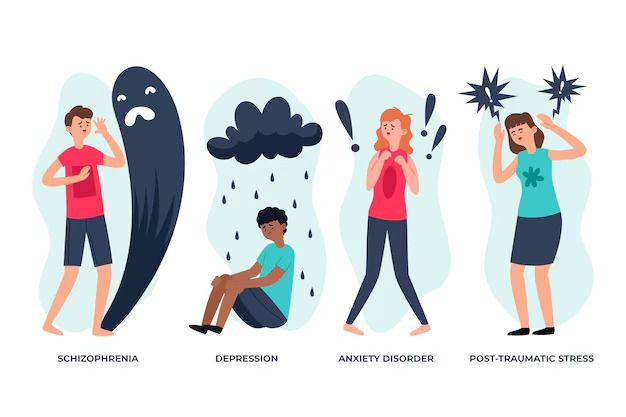
o Depression feels like carrying an invisible weight, making daily life feel dull and energy-draining.
o Bipolar Disorder brings intense mood shifts—people experience high-energy “up” periods (mania) and low-energy “down” times (depression).
2. Anxiety Disorders: These involve persistent worry or fear that affects daily life.
o Generalized Anxiety Disorder (GAD) can feel like an endless worry loop, even over everyday things.
o Panic Disorder may cause sudden, intense bursts of fear or panic without warning.
o Social Anxiety is like feeling you’re on a stage with everyone watching, even in normal social settings.
3. Psychotic Disorders: These alter a person’s sense of reality.
o Schizophrenia involves symptoms like hallucinations (seeing or hearing things that aren’t there) and delusions, which can make it hard for individuals to differentiate between what’s real and imagined.

4. Eating Disorders: These are about much more than food; they involve complex feelings about body image and self-worth.
o Anorexia Nervosa involves extreme food restriction, while Bulimia Nervosa involves cycles of overeating and purging.
5. Personality Disorders: These affect how someone relates to themselves and others.
o Borderline Personality Disorder (BPD) can cause intense emotions, impulsive actions, and challenges in relationships.
o Narcissistic Personality Disorder involves an inflated sense of self-importance but can mask deep insecurities.
6. Obsessive-Compulsive Disorders (OCD): This involves unwanted, repetitive thoughts and behaviors.
o People with OCD may feel driven to repeat certain actions to ease their anxiety, like checking locks repeatedly or excessive cleaning.
These categories give us a broad look at mental health, each one showing the variety and depth of challenges people might face. Being informed helps reduce stigma and increases empathy toward those experiencing these conditions.

 Site Title